![Best Nonalcoholic Drinks That Give You a Buzz [2026]](http://curiouselixirs.com/cdn/shop/articles/groupshotWIDEwithsparkles_1_e1c1c5d4-6c2e-4676-8e09-6593fcd75af3.jpg?v=1781228425&width=1500)
![Best Nonalcoholic Drinks That Give You a Buzz [2026]](http://curiouselixirs.com/cdn/shop/articles/groupshotWIDEwithsparkles_1_e1c1c5d4-6c2e-4676-8e09-6593fcd75af3.jpg?v=1781228425&width=991)
Nonalcoholic drinks that give you a buzz are functional beverages made with active botanical ingredients — such as adaptogens, kava, nootropics, or hemp-derived cannabinoids — that produce mood-altering effects like calm, focus, euphoria, or social ease without alcohol. The global nonalcoholic beverage market reached an estimated $1.41 trillion in 2025 and is projected to grow to $2.85 trillion by 2035, with functional beverages representing the fastest-growing product segment. This guide breaks down every major category of buzz-producing nonalcoholic drinks, how they work, what's in them, and which ones deliver on their promises.
Key Takeaways
- Not all "buzz drinks" work the same way. Adaptogen drinks, kava beverages, nootropic tonics, and hemp-infused seltzers each interact with different biological pathways to produce distinct effects — from gentle calm to noticeable euphoria.
- Ingredients matter more than marketing. The most effective functional beverages use clinically recognized botanicals at meaningful doses, not trace amounts hidden behind proprietary blends.
- Consistency amplifies results. Many adaptogenic and nootropic ingredients produce cumulative benefits with daily use, unlike alcohol's immediate (and temporary) effects.
What Makes a Nonalcoholic Drink "Give You a Buzz"?
The term "buzz" in the context of nonalcoholic drinks refers to a perceptible shift in mood, energy, or mental state — not intoxication. These effects are produced by bioactive compounds in plants, fungi, and other natural sources that interact with the nervous system in specific ways. Some ingredients promote relaxation by supporting GABA activity (the same neurotransmitter system alcohol affects). Others improve focus and mental clarity through cholinergic or dopaminergic pathways. The key difference from alcohol: these ingredients support the body's natural chemistry rather than depressing the central nervous system.
The effectiveness of any functional beverage depends on three things: the specific ingredients used, the dose of those ingredients per serving, and whether the individual consumes them consistently. A single can of an adaptogen seltzer with trace amounts of ashwagandha won't produce the same effect as a concentrated kava tonic with 150mg of kavalactones. Understanding the categories below helps you match the right type of drink to the experience you're looking for.
Category 1: Adaptogen Drinks
Adaptogen drinks are beverages infused with herbs and botanicals classified as adaptogens — natural substances that help the body resist and adapt to physical, chemical, and biological stressors. The concept originates from traditional Ayurvedic and Chinese medicine, though the term "adaptogen" was formally defined by Soviet toxicologist N.V. Lazarev in 1947 and later refined by researcher Israel Brekhman, who established three criteria: an adaptogen must be non-toxic at normal doses, produce a non-specific resistance to stress, and have a normalizing influence on the body regardless of the direction of change.
The most common adaptogens found in functional beverages include ashwagandha (shown in clinical studies to reduce cortisol levels by 11-32%), rhodiola rosea (associated with reduced mental fatigue and improved cognitive performance under stress), lion's mane mushroom (linked to nerve growth factor stimulation and cognitive support), holy basil (traditionally used for its calming and clarifying properties), and reishi mushroom (studied for immune modulation and sleep quality improvement).
The "buzz" from adaptogen drinks is typically described as a gentle shift toward calm alertness — not sedation or intoxication. Many users report the effects become more noticeable with consistent daily consumption over one to two weeks, as adaptogens work cumulatively to modulate the body's stress response. For a deeper look at how each adaptogen works and which Curious Elixirs products contain them, see our adaptogen drinks guide.
Adaptogen Ingredients at a Glance
Ashwagandha — Stress relief and calm. Modulates cortisol and GABA activity. Effects are cumulative over 1-2 weeks of daily use.
Lion's Mane — Mental clarity and focus. Stimulates nerve growth factor (NGF). Effects build over days to weeks.
Rhodiola Rosea — Energy and mental stamina. Influences serotonin and dopamine pathways. Onset within 30-60 minutes.
Reishi — Relaxation and sleep support. Modulates immune function and promotes calm. Cumulative over 1-2 weeks.
Holy Basil (Tulsi) — Calm and mood balance. Lowers cortisol with mild anxiolytic effects. Onset within 20-40 minutes.
Schisandra — Bright lift and endurance. Supports adrenal function. Onset within 30-60 minutes.
Kanna (Sceletium) — Euphoria and mood elevation. Acts as a natural serotonin reuptake inhibitor. Onset within 15-30 minutes.
Featured: Curious Elixirs — Adaptogen Cocktails
Curious Elixirs are nonalcoholic craft cocktails made with adaptogens, botanicals, and organic juices — no refined sugar, no preservatives, and no artificial flavors. Each recipe is designed as a complete cocktail experience with layered flavor profiles (bitter, sweet, spice, herbal) and functional ingredients selected for specific mood effects. Named one of the New York Times' "Best nonalcoholic Drinks," the line includes nine distinct recipes plus a lion's mane lager.
What sets adaptogen-based cocktails apart from adaptogen seltzers is concentration and complexity. A 200ml bottle of Curious Elixirs contains a significantly higher dose of active botanicals than a 12oz adaptogen seltzer, because the format allows for bolder flavors and more concentrated formulations. The result is a drink that's designed to be sipped slowly, like a cocktail — not chugged like a seltzer.
| Product | Flavor / Key Ingredients |
|---|---|
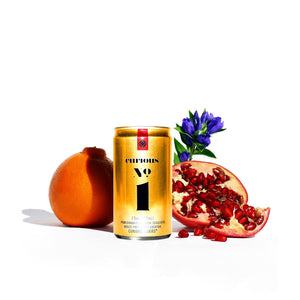
| Curious No. 1 | Pomegranate negroni — rhodiola (400mg), gentian root, bitter orange, fennel. Calm, balanced. |
| Curious No. 2 | Spicy pineapple margarita — damiana, ginger, ancho, jalapeño, smoked sea salt. Uplifting, social. |
| Curious No. 3 | Cucumber lavender G&T — ashwagandha (125mg), juniper berry, angelica root. Calm, cooling. |
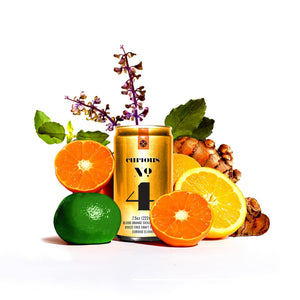
| Curious No. 4 | Blood orange spritz — American ginseng, holy basil, turmeric, rhubarb root (130mg). Bright, warming. |
| Curious No. 5 | Smoked cherry old fashioned — shatavari root, elderberry, cacao, gentian, cayenne. Bold, grounding. |
| Curious No. 6 | Tropical piña colada — coconut cream, oat milk, lemon balm, ginger, nutmeg, black pepper. Smooth, tropical. |
| Curious No. 7 | Sparkling blanc de blancs — chardonnay grape, elderflower, green tea with jasmine, lavender. Effervescent, floral. |
| Curious No. 8 | Berry digestif — lion's mane, reishi, chaga, gentian, blackberry, blueberry, fig. Complex, restorative. |
| Curious No. 9 | Oaked chardonnay rosé — kanna, California poppy, fermented echinacea, French oak. Euphoric, warm. |
| Curious Zero | German-style lager — lion's mane (400mg), maca root (1,000mg), Yakima hops, malted barley. Focused, crisp. |
| Curious Red | Nonalcoholic syrah — kanna, ashwagandha, passionflower, echinacea, French oak, grape seed. Dry, sophisticated. |
Category 2: Kava Beverages
Kava (Piper methysticum) is a root native to the South Pacific islands, where it has been consumed ceremonially for over 3,000 years. Unlike adaptogens, which produce subtle and cumulative effects, kava delivers a noticeable and immediate sensation. The active compounds — called kavalactones — interact directly with GABA receptors, the same pathway that alcohol and benzodiazepines target, producing feelings of relaxation, mild euphoria, and social ease. This makes kava the nonalcoholic category that most closely mimics the "loosening up" sensation of alcohol.
The effects of kava typically begin within 15-30 minutes and can last 2-4 hours. Common kava beverages on the market include bottled kava tonics, kava seltzers, and concentrated kava spirits designed for mixing into mocktails. It's worth noting that kava quality varies significantly between products — the potency depends on the kavalactone concentration per serving, which typically ranges from 50mg to 250mg across commercial beverages. The global recommended daily limit for kavalactones is approximately 250mg.
Kava is legal in the United States but has faced regulatory scrutiny in some European countries due to early concerns about liver toxicity. More recent research has largely attributed those cases to poor-quality preparations using non-root parts of the plant. Reputable kava products use only the root extract, which has a long safety record when consumed at recommended doses.
Category 3: Nootropic Tonics
Nootropics are substances that enhance cognitive function — memory, focus, creativity, or motivation — without significant side effects. In the functional beverage space, nootropic drinks typically combine ingredients like L-theanine (an amino acid found naturally in green tea), caffeine in low doses, GABA, and botanical extracts like ginkgo biloba or bacopa monnieri. The "buzz" from nootropic beverages is more cerebral than physical — a heightened state of mental clarity and focus rather than relaxation or euphoria.
L-theanine is one of the most well-studied nootropic ingredients in functional beverages. Research shows it promotes alpha brain wave activity, which is associated with a state of calm alertness. When combined with low-dose caffeine (typically 30-50mg, compared to 95mg in a standard coffee), L-theanine produces a focused energy without the jitteriness or crash. Many adaptogen drinks also include nootropic ingredients, creating hybrid formulations that support both stress resilience and cognitive performance. Some adaptogen cocktails incorporate nootropic ingredients as well — for example, Curious Zero combines lion's mane with green tea for a focus-forward profile, blurring the line between adaptogen and nootropic categories.
Category 4: Hemp-Derived THC and CBD Drinks
Hemp-derived THC and CBD beverages represent the newest and most rapidly growing segment of the functional drink market. These products contain cannabinoids extracted from legally grown hemp (containing less than 0.3% Delta-9 THC by dry weight), with many beverages offering precise microdoses of 2.5mg to 5mg of THC per serving. Unlike other categories on this list, THC drinks produce a psychoactive effect — users feel noticeably "high," though low-dose products are designed to keep the experience mild and manageable.
CBD beverages, by contrast, do not produce a high. CBD is non-psychoactive and is primarily associated with reduced anxiety, anti-inflammatory effects, and general relaxation. Many products combine both THC and CBD in ratios designed for specific outcomes — for example, a 1:1 THC-to-CBD ratio for balanced relaxation, or a higher CBD ratio for calming without psychoactive effects. Legal status varies by state, so consumers should verify local regulations before purchasing THC-infused beverages.
How to Choose the Right Buzz Drink for You
If you want a cocktail ritual without alcohol → Try adaptogen drinks. Expect a gentle calm, subtle mood lift, and layered flavor. Best for dinner parties, weeknight wind-downs, and daily rituals.
If you want the closest thing to feeling "tipsy" → Try kava beverages. Expect noticeable relaxation, social ease, and mild euphoria. Best for social events and Friday night replacements.
If you want sharp focus and mental energy → Try nootropic tonics. Expect calm alertness, concentration, and no crash. Best for work sessions, creative projects, and afternoon boosts.
If you want a definite, immediate "high" → Try THC beverages (where legal). Expect a psychoactive effect that varies by dose. Best for experienced cannabis users in legal states.
If you want relaxation without any high → Try CBD beverages. Expect subtle calm, reduced anxiety, and non-psychoactive effects. Best for stress relief, pre-sleep, and general wellness.
Frequently Asked Questions
Do nonalcoholic buzz drinks actually work?
Yes, but the effect depends on the category and the dosage. Kava and THC drinks produce the most immediately noticeable effects. Adaptogen drinks produce subtler shifts — a gentle calm or lift — that become more pronounced with consistent use. Nootropic drinks typically sharpen focus and clarity rather than producing a "buzz" in the traditional sense. The biggest variable is dosage: products with clinically meaningful amounts of active ingredients will outperform those with trace amounts.
Are nonalcoholic buzz drinks safe?
Most functional beverages are considered safe for healthy adults when consumed at recommended doses. Adaptogens like ashwagandha and rhodiola have long safety records in traditional medicine and modern clinical studies. Kava is safe when made from root extract and consumed within the daily recommended limit of approximately 250mg kavalactones. THC beverages should be approached with caution, especially for first-time users, as individual tolerance varies. As with any supplement, people who are pregnant, nursing, on medication, or managing a health condition should consult a healthcare provider.
Can you drink adaptogen beverages every day?
Yes, and many adaptogens actually work best when consumed consistently. Research on ashwagandha, rhodiola, and lion's mane shows that benefits accumulate over time with daily use — similar to how regular exercise produces compounding results. Most adaptogen drink brands, including Curious Elixirs, are formulated for daily consumption.
How long does it take to feel the effects?
This varies by category. Kava: 15-30 minutes. THC drinks: 15-45 minutes. Nootropics (L-theanine + caffeine): 20-40 minutes. Adaptogens: some ingredients like kanna or holy basil can produce subtle effects within 20-30 minutes, while others like ashwagandha and lion's mane build effects over days or weeks of consistent use.
Do nonalcoholic buzz drinks have calories or sugar?
This varies widely. Many adaptogen seltzers and kava seltzers are low-calorie (10-30 calories) and low-sugar (2-5g). Craft adaptogen cocktails like Curious Elixirs use organic juices and contain moderate calories (around 60-90 per serving) with no refined sugar or artificial sweeteners. THC beverages range from zero-calorie to moderate depending on formulation. Always check the nutrition label for specifics.
Are adaptogen drinks better than kava?
They're different, not better or worse. Adaptogen drinks are designed for daily rituals and produce cumulative wellness benefits — stress resilience, mood balance, and cognitive support over time. Kava is more event-based: it produces a noticeable, immediate relaxation effect that's well-suited to replacing alcohol in social situations. Many people use both for different occasions.
Ready to explore adaptogen-powered craft cocktails? Browse the full Curious Elixirs lineup and find the flavor that fits your moment.